No products in the cart.

The Complete Guide to Moroccan Desserts: Sweets, Cookies & Pastries
Quick answer: Moroccan desserts are the cookies, pastries, and sweet treats Moroccans serve with mint tea — not after dinner, but through the day and at celebrations. The best known are chebakia, gazelle horns (kaab el ghazal), ghriba, fekkas, and briouats, most made with almonds, honey, sesame, and orange blossom water.
Moroccan desserts are a world of their own. They aren’t the heavy after-dinner cakes many Americans picture — they’re small, fragrant, almond-rich bites eaten at tea time, through Ramadan, and at every wedding and holiday table. This guide walks you through the most famous Moroccan sweets one by one: what each tastes like, when Moroccans eat it, and what it’s made of. If you’d rather not bake, we’ll also show you where to buy authentic Moroccan desserts online in the USA.
What are Moroccan desserts?
The Complete Guide to Moroccan Desserts Moroccan desserts are sweet cookies, pastries, and confections built around almonds, honey, and flower waters, and tied closely to Morocco’s tea culture. The biggest difference from Western dessert: Moroccans rarely eat them after a meal. They’re served in the afternoon with a glass of sweet mint tea, offered to guests the moment they arrive, and piled high for holidays.
Most are small — a bite or two — so a table can hold a dozen kinds at once. Their flavors come from Morocco’s mixed heritage: Amazigh (Berber), Arab, and Andalusian cooks all shaped the recipes you see today. That’s why one sweet leans on toasted barley and the next on almond paste and orange blossom.
How are Moroccan desserts different from other Middle Eastern sweets?
People often group Moroccan sweets with Middle Eastern desserts like baklava or maamoul, but they have their own character. Moroccan baking leans on almonds and orange blossom water rather than the pistachios and rosewater common further east. Many Moroccan sweets are fried and then dipped in honey — chebakia and briouats — instead of being soaked in sugar syrup like baklava.
There’s also a difference in timing. Moroccan sweets are tied to mint tea and the daily rhythm of tea time, while Levantine and Gulf sweets more often follow a meal. The result is a lighter, more floral, almond-forward style.
Why Moroccan sweets matter: tea time, Ramadan and celebrations
To understand Moroccan desserts, you have to understand when they appear. They aren’t an everyday indulgence so much as a sign of welcome and a fixture of the calendar.
- Tea time: The daily ritual. A tray of cookies comes out with mint tea in the afternoon, and for guests at any hour.
- Ramadan: Chebakia is the signature sweet of the holy month, eaten to break the fast alongside harira soup. Sellou keeps energy up through long fasting days.
- Eid: The end of Ramadan calls for trays of gazelle horns, ghriba, and briouats shared with family and neighbors.
- Weddings and feasts: Mhencha and gazelle horns crown the dessert table at almost every Moroccan wedding.
Moroccan desserts at a glance
Here’s a quick reference to the most common Moroccan sweets — what each one is, its main flavors, and when Moroccans usually eat it.
| Dessert | Type | Key flavors | When it’s eaten |
|---|---|---|---|
| Chebakia | Fried cookie | Honey, sesame, anise | Ramadan |
| Gazelle horns (kaab el ghazal) | Filled cookie | Almond, orange blossom | Weddings, gifts |
| Ghriba | Cookie | Almond, coconut or semolina | Tea time, feasts |
| Fekkas | Twice-baked biscuit | Almond, raisin, anise | Tea time, everyday |
| Briouats | Fried pastry | Almond, honey | Ramadan, feasts |
| Mhencha | Coiled pastry | Almond, cinnamon, honey | Weddings |
| Sellou (sfouf) | No-bake sweet | Roasted flour, almond, sesame | Ramadan |
| Meskouta | Cake | Orange or lemon | Everyday, guests |
| Seffa | Sweet couscous | Cinnamon, sugar, almond | Special meals |
| Baghrir | Pancake | Semolina, honey, butter | Breakfast, tea time |
| Sfenj | Doughnut | Fried dough, sugar | Breakfast, street snack |
The most famous Moroccan cookies
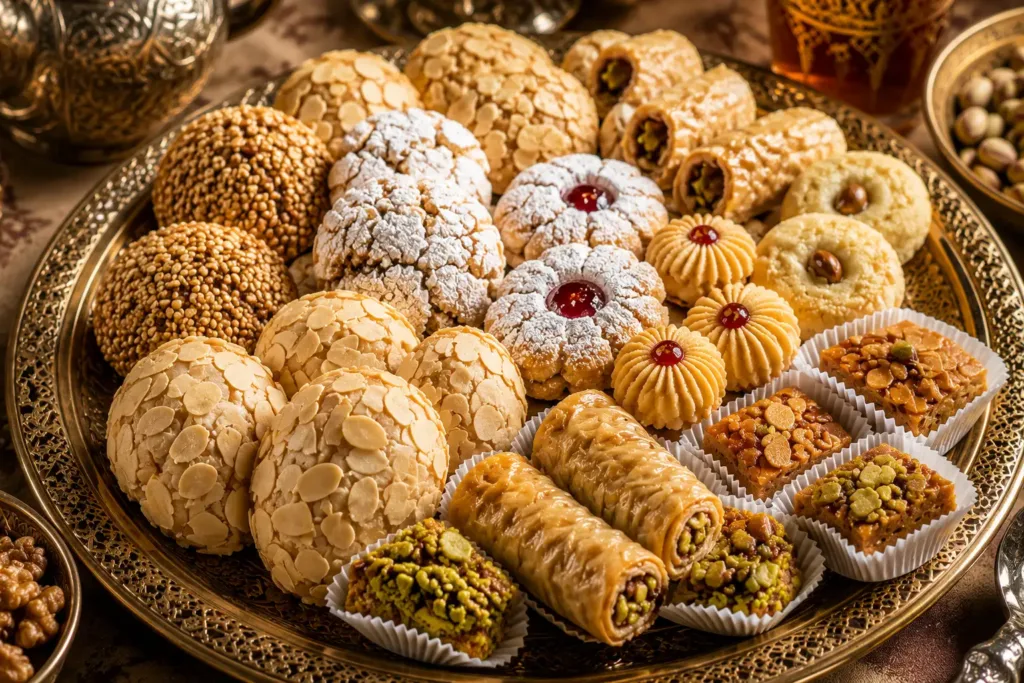
Cookies are the heart of the Moroccan sweet table. These three turn up most often.
Ghriba — the cracked-top cookie
Ghriba (also spelled ghoriba) is a round cookie with a signature crackled top and a soft, crumbly center. It comes in many versions: coconut, almond, semolina, ghriba behla (denser, more flour), and bran-based nkhala. Affordable and easy to love, it shows up at weddings, parties, and feast-day breakfasts.
Fekkas — Moroccan biscotti
Fekkas is a twice-baked biscuit, sliced thin and crunchy, usually studded with almonds and raisins (and sometimes sesame or anise). Moroccans dip it in tea or coffee. If you want the full story, read what fekkas is — or try an authentic pack of Fekkas Beldi.
Kaab el Ghazal (gazelle horns)
Kaab el ghazal, known in English as gazelle horns, is the most iconic Moroccan cookie: a slender crescent of thin pastry wrapped around almond paste scented with orange blossom water. It’s the cookie families make for weddings and serve to honored guests.
Fried and honey-dipped sweets
This group is sticky, glossy, and tied to celebration — especially Ramadan.
Chebakia — the Ramadan cookie
Chebakia is folded into a flower shape, deep-fried until crisp, then bathed in warm honey and rolled in toasted sesame seeds. It’s the sweet most associated with Ramadan, served beside a steaming bowl of harira to break the fast. Made in big batches before the month begins, it keeps for weeks.
Sfenj — Moroccan doughnuts
Sfenj is a light, chewy ring of fried dough, sold by street vendors in the morning and eaten plain, dusted with sugar, or dunked in tea. You’ll smell it frying at stalls in the early morning, often sold strung on a loop of palm cord to carry home. It’s breakfast and treat in one.
Briouats — almond pastry triangles
Sweet briouats are small triangles or cigars of thin warqa pastry filled with almond paste, fried, and dipped in honey. (A savory version, filled with meat or cheese, shares the same wrapper.) The contrast of crackly pastry and soft, fragrant almond filling is what makes them vanish fast off a tea tray. They appear at Ramadan and celebrations.
Moroccan pastries
Mhencha — the snake cake
The Complete Guide to Moroccan Desserts Mhencha takes its name from its coiled, snake-like shape. A long rope of almond-filled pastry is wound into a spiral, baked, and finished with honey and a dusting of cinnamon or sugar. Rich and showy, it’s a wedding-table classic.
Jawhara (ktefa) — layered pastry
Jawhara, also called ktefa, layers crisp sheets of fried warqa pastry with toasted almonds, sugar, and a pour of sweet, orange-blossom-scented cream or custard. It’s plated as a single dessert and meant to be shared.
Cakes, spoon sweets and lighter desserts
Not every Moroccan dessert is a fried, honeyed cookie. Several are soft, simple, and made at home daily.
Meskouta — Moroccan orange cake
Meskouta is the everyday Moroccan cake: a moist, simple sponge flavored with fresh orange (or lemon), often baked in a bundt pan. It’s the cake a Moroccan home cook reaches for when guests drop by.
Sellou (sfouf) — the Ramadan energy sweet
Sellou, also called sfouf, isn’t baked at all. It’s a dense blend of roasted flour, fried then ground almonds, toasted sesame, butter, and honey, eaten by the spoonful. Rich in calories and easy to store, it’s made to sustain people through Ramadan.
Seffa — sweet couscous
Seffa turns couscous or fine vermicelli into dessert: steamed, then dressed with butter, powdered sugar, cinnamon, and almonds. It’s mounded into a cone and decorated with lines of cinnamon and a scatter of fried almonds. Seffa medfouna hides a spiced meat or chicken filling underneath the sweet topping for special occasions.
Orange and cinnamon salad
The lightest Moroccan dessert is also one of the most common: sliced fresh oranges dusted with cinnamon and a little orange blossom water. It closes a heavy meal cleanly and needs no baking.
Sweet breakfast breads
Some Moroccan favorites blur the line between breakfast and dessert. They’re griddle-cooked and served with honey, butter, or jam.
- Baghrir — spongy semolina pancakes covered in tiny holes (“thousand-hole pancakes”) that soak up a honey-and-butter syrup.
- Msemen — square, flaky, pan-fried flatbread, folded in layers and drizzled with honey.
- Harcha — a pan-cooked semolina bread with a cornbread-like crumb, split and spread with honey or jam.
What are Moroccan desserts made of?
Most Moroccan sweets are built from a short, recognizable pantry. Once you know it, you can taste the family resemblance across every cookie and pastry.
- Almonds — ground into paste for gazelle horns and briouats, or whole in fekkas.
- Honey — the glaze on chebakia, briouats, and mhencha.
- Orange blossom and rose water — the floral perfume in almost everything.
- Sesame seeds — toasted, on chebakia and in sellou.
- Semolina and flour — the base of ghriba, harcha, and baghrir.
- Warqa pastry — the paper-thin sheets for briouats, mhencha, and jawhara.
- Spices — anise, cinnamon, and sometimes a touch of gum arabic.
One note on labels: not every “Moroccan cookie” is sweet. Brands also make savory aperitif pastries — crunchy spiral rolls flavored with olive, oregano, or paprika. If that’s new to you, here’s our guide to Moroccan savory rolls, including the savory olive rolls we carry.
How are Moroccan desserts served?
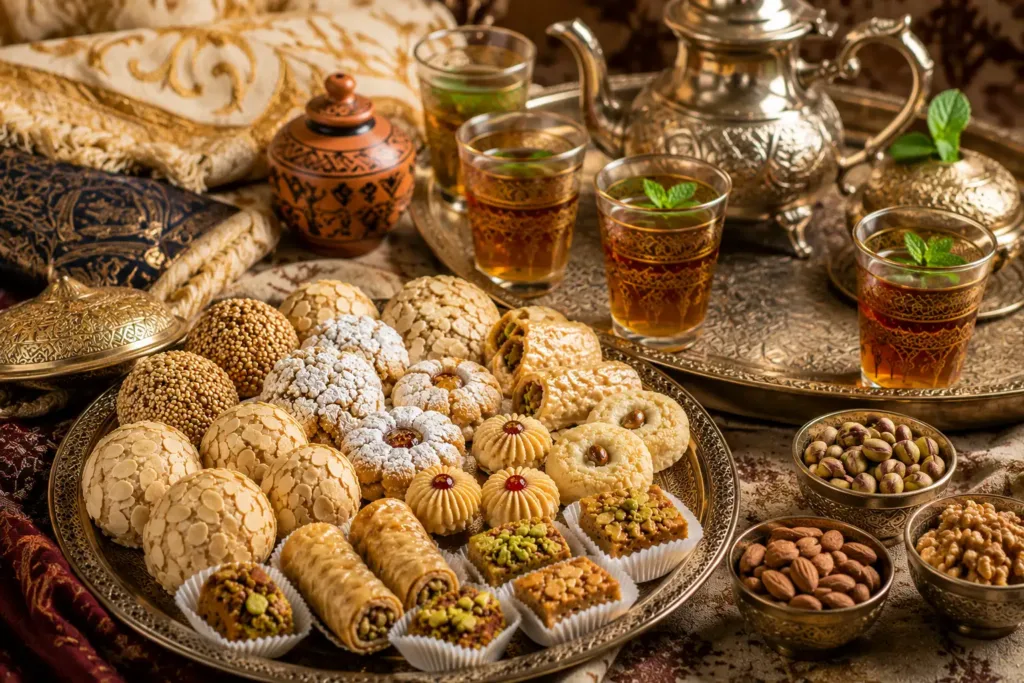
Almost always with mint tea. The pairing isn’t a suggestion — it’s the point. Sweet, hot Maghrebi mint tea cuts the richness of an almond cookie, and pouring it from a height to make foam is part of the welcome. To set the scene at home, you’ll want Moroccan mint tea and tea glasses alongside the sweets.
Are Moroccan desserts hard to make at home?
Some are simple; others take real skill. Everyday sweets like meskouta cake or an orange salad come together in minutes. But the showpieces — gazelle horns, chebakia, and mhencha — are time-consuming and fiddly. Folding chebakia into its flower shape, or wrapping paper-thin warqa around almond paste, takes practice that Moroccan families build over years.
Many home cooks make the easy ones and buy the rest, especially during Ramadan when whole trays are needed at once. If you want the authentic taste without the hours of work, ready-made versions are the practical choice.
Where to buy authentic Moroccan desserts in the USA
Most American supermarkets don’t carry real Moroccan sweets, so the reliable way to get them is from a specialty Moroccan grocer that ships nationwide. Look for authentic brands, clear Halal labeling, and sealed, shelf-stable packaging that travels well.
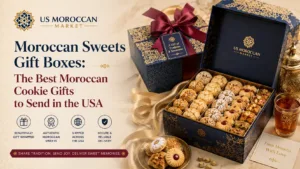
At US Moroccan Market you can buy authentic Moroccan cookies and sweets — from the butter cookie selection to Moroccan macarons — shipped Halal and sealed to all 50 states, free over $120. For a full comparison of your options, see where to buy Moroccan sweets online in the USA. Sending a present? Our Moroccan sweets gift boxes pair perfectly with Medjool dates, and planning for the holy month is easy with our roundup of Moroccan sweets for Ramadan and Eid.
Which Moroccan dessert should you try first?
New to Moroccan sweets? Start with the flavor you already enjoy:
- Love nutty, not-too-sweet treats? Try fekkas or gazelle horns — almond-forward and mild.
- Want the famous Ramadan cookie? Go for chebakia, with its honey-and-sesame crunch.
- Prefer soft, simple cookies? Ghriba is crumbly, gentle, and easy to like.
- Buying for someone else? An assorted box lets them sample several kinds at once.
- After something light? A fresh orange-and-cinnamon salad is the easiest of all.
If you can’t decide, a mixed box is the safest bet — it’s how most people find their favorite.
How to store Moroccan sweets
Packaged Moroccan sweets are sealed for a long shelf life, so they keep for weeks in a cool, dry pantry — just check the best-by date. Once a pack is open, move the contents to an airtight container so cookies like fekkas and ghriba stay crisp. Honey-soaked sweets such as chebakia hold their texture well at room temperature.
Frequently Asked Questions
What is the most famous Moroccan dessert?
Chebakia and gazelle horns (kaab el ghazal) are the most famous. Chebakia, a honey-and-sesame fried cookie, is tied to Ramadan, while gazelle horns — crescent cookies filled with almond paste and orange blossom — are the classic celebration and gift cookie.
What do Moroccans eat for dessert?
Moroccans usually eat small cookies and pastries with mint tea rather than a large dessert after dinner. Common choices include ghriba, fekkas, chebakia, briouats, and gazelle horns, along with simple options like orange-and-cinnamon salad or a slice of meskouta cake.
Are Moroccan sweets eaten after a meal?
Usually not. Traditional Moroccan sweets are eaten in the afternoon at tea time or served to guests, not as a post-dinner course. Lighter options like fresh orange salad sometimes follow a heavy meal, but most cookies belong to tea time and celebrations.
What is the most popular Moroccan sweet during Ramadan?
Chebakia is the star of Ramadan, eaten with harira soup to break the fast. Sellou (sfouf) and almond briouats are also Ramadan favorites because they’re rich, energy-dense, and keep well through the month.
What are Moroccan cookies made of?
Most are made from ground almonds, honey, sesame, orange blossom or rose water, semolina or flour, and butter, with spices like anise and cinnamon. These few ingredients give Moroccan cookies their nutty taste and floral aroma.
Are Moroccan desserts gluten-free?
Most are not — they usually contain wheat flour or semolina. A few almond- or coconut-based cookies can be gluten-free, but you should always check the ingredients on each product, since recipes vary by maker.
Are Moroccan sweets Halal?
Traditional Moroccan sweets are made without alcohol or pork, using ingredients like almonds, butter, eggs, and honey, so they’re typically Halal. If it matters to you, check that the specific product is clearly labeled Halal.
Where can I buy Moroccan desserts in the USA?
Order them online from a specialty Moroccan grocer such as US Moroccan Market, which ships authentic, Halal, sealed Moroccan sweets to all 50 states, with free shipping over $120 — far easier than finding them in a local supermarket.
Bring the Moroccan sweet table home
From honey-soaked chebakia to delicate gazelle horns, Moroccan desserts are made to be shared over tea. Now that you know the classics, you can taste them for yourself: shop our authentic Moroccan sweets and we’ll ship them anywhere in the US — free on orders over $120.


Related posts
If you love Moroccan cuisine, you already know that the right ingredients can make a big difference. Moroccan cooking is known for its aromatic spices,... Continue reading
Quick answer: A Moroccan sweets gift box is an assortment of authentic Moroccan cookies and pastries — like sablés, fekkas, and macarons — packaged for gifting.... Continue reading
Add comment